Hair loss in women is far more common than most people realize. In India, millions of women silently deal with thinning hairlines, widening partitions, and receding temples—yet very few seek the right treatment. For a long time, hair transplant were considered a solution only for men. But that belief is changing rapidly. Today, women across the country are exploring advanced surgical hair restoration with confidence.
At Ojas Aesthetics, Hyderabad’s trusted aesthetic clinic, Dr. V.K. Srinagesh and his expert team have helped numerous women reclaim their hair—and their confidence—through safe, personalised hair restoration procedures. If you have been searching for the hair transplant in Hyderabad for women, this guide will walk you through everything you need to know: what causes female hair loss, how the procedure works, who the right candidates are, and what results you can realistically expect.
Why Female Hair Loss Is Different from Male Hair Loss

When men lose hair, it typically follows a predictable pattern — a receding hairline or a bald patch at the crown. Women experience hair loss very differently. For most women, the hair thins gradually and uniformly across the scalp, particularly along the central partition. This type of hair loss is called Female Pattern Hair Loss (FPHL) or Androgenetic Alopecia. Because of this diffuse pattern, a simple copy-paste approach from male hair transplant techniques will not work for women.
Some of the most common causes include:
- Hormonal imbalances—especially related to thyroid disorders, PCOS, or post-pregnancy hormonal changes
- Nutritional deficiencies — low iron, vitamin D, biotin, or protein intake
- Stress and lifestyle factors—chronic stress, crash diets, and poor sleep habits
- Autoimmune conditions—such as Alopecia Areata
- Medications and medical treatments — chemotherapy or prolonged use of certain drugs
- Traction Alopecia—caused by tight hairstyles like ponytails or braids worn repeatedly over the years
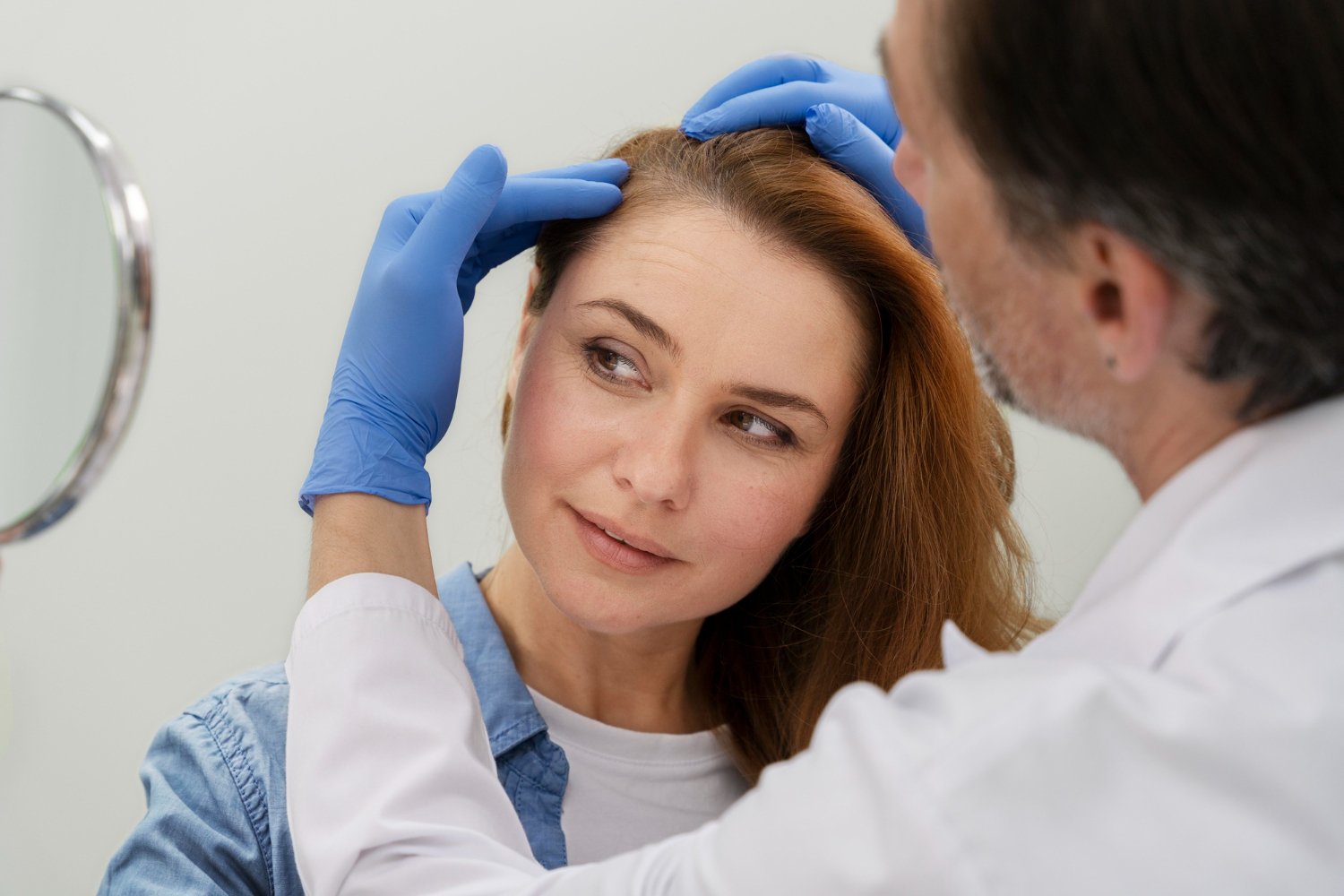
Understanding the root cause is the very first step. At Ojas Aesthetics, every patient undergoes a thorough scalp analysis before any procedure is recommended, ensuring that the right treatment plan is designed specifically for her.
What Is a Female Hair Transplant?
A female hair transplant is a minimally invasive surgical procedure in which healthy hair follicles are extracted from a donor area — usually the back or sides of the scalp — and carefully implanted into areas of thinning or no hair growth. Unlike wigs or temporary solutions, a hair transplant offers a permanent, natural-looking result because the transplanted follicles are genetically resistant to the hormones responsible for hair loss.
The procedure requires a high level of skill and artistry, particularly in women, since the hairline design and follicle placement must look completely natural and blend seamlessly with existing hair.
A properly executed female hair transplant helps:
- Restore density along the central partition and crown area
- Improve the hairline and reduce the appearance of a receding temple
- Fill in bald patches caused by Alopecia Areata or Traction Alopecia
- Restore hair lost due to injury, burns, or surgical scars
- Significantly boost self-confidence and emotional well-being
Hair Transplant Techniques Used at Ojas Aesthetics
At Ojas Aesthetics, Dr. V.K. Srinagesh employs the latest, clinically proven techniques to deliver outstanding results for women seeking hair transplant in Hyderabad. The approach is always personalised, combining techniques as needed for the best outcome.
1.) FUE (Follicular Unit Extraction)
FUE is the most widely preferred method for women today. In this technique, individual hair follicles are extracted one by one from the donor area using a micro-punch tool. Because the extractions are tiny and scattered, there is no linear scar, making it ideal for women who prefer to wear their hair short or in different styles. Recovery is quicker, discomfort is minimal, and the results are exceptionally natural.
2.) FUT (Follicular Unit Transplantation)
FUT involves removing a thin strip of scalp from the donor area, from which individual follicular units are carefully separated under magnification and then transplanted. While FUT leaves a fine linear scar that is usually hidden by surrounding hair, it allows for a larger number of grafts to be transplanted in a single session. This technique is particularly effective for women with significant diffuse hair loss who require higher graft counts.
3.) Advanced Implantation Methods
At Ojas Aesthetics, extracted follicles are implanted using advanced tools that allow precise control over the depth, angle, and direction of each graft. This attention to detail is what separates an average result from a truly natural-looking one. The spacing between follicles is carefully calibrated to mimic the way natural hair grows, ensuring seamless integration with existing hair.
Is Hair Transplant Safe for Women?
This is perhaps the most common question women ask before considering a hair transplant in Hyderabad. The short answer is yes, a hair transplant is safe for women when performed by a qualified and experienced surgeon at a reputable clinic.
However, the key difference lies in patient selection. Not every woman experiencing hair loss is automatically a candidate for surgery. A thorough evaluation is essential to determine whether the hair loss is stable, whether there is a sufficient donor area, and whether non-surgical treatments should be tried first.
Many women experience temporary shedding conditions, such as
- Telogen Effluvium — sudden hair shedding triggered by stress, childbirth, or illness
- Post-pregnancy hair loss — which typically resolves within 6–12 months
- Nutritional deficiency-related hair loss — which improves significantly with dietary correction and supplements
For these conditions, surgery is rarely the first recommendation. Dr. V.K. Srinagesh and the team at Ojas Aesthetics take a conservative, holistic approach—surgery is recommended only when it will deliver a meaningful, lasting benefit.
Modern clinics now use the following:
- Advanced anaesthesia techniques to ensure the procedure is virtually pain-free
- Sterile, controlled environments to eliminate infection risks
- High-resolution scalp analysis tools for precise planning
- Carefully controlled storage and implantation conditions to maximise graft survival rates
At Ojas Aesthetics, patient safety and comfort are the highest priorities. Every step of the procedure — from the initial consultation to post-operative care — is guided by internationally accepted protocols and the skilled hands of Dr. V.K. Srinagesh.
Common Myths About Female Hair Transplant
1.) “Hair transplant looks unnatural.”
This myth belongs to an earlier era. With modern FUE techniques and the expertise of an experienced surgeon like Dr. V.K. Srinagesh, transplanted hair blends so seamlessly with natural hair that even a trained eye struggles to tell the difference. The angle, depth, and density of each graft are meticulously planned to mimic natural hair growth patterns.
2.) “Women cannot undergo a hair transplant.”
This is completely false. Women are absolutely suitable candidates for hair transplant surgery, provided they meet the clinical criteria. Thousands of women have already undergone successful procedures and are living with fuller, more confident hair.
3.) “Hair transplant is extremely painful.”
The procedure is performed under local anaesthesia. Most patients report feeling only mild pressure or a slight tugging sensation at most. Post-procedure soreness is usually mild and manageable with simple pain relief. The majority of patients at Ojas Aesthetics return to their routine activities within a few days.
4.) “The results are immediate.”
Patience is essential after a hair transplant. After the procedure, transplanted follicles go through a resting and shedding phase before new growth begins. Most patients start noticing visible new growth between 3 to 6 months, with the final, full results typically visible at the 12-month mark. The wait is absolutely worth it.
5.) “Every woman with hair loss needs surgery.”
Surgery is a last resort, not a first step. For many women, non-surgical treatments such as PRP therapy, topical medications, nutritional interventions, and low-level laser therapy can deliver excellent results. At Ojas Aesthetics, surgery is recommended only when it is truly the best option for the patient.
Final Thoughts
Female hair loss is not a condition you have to simply accept. With the right diagnosis, the right guidance, and the right treatment, you can restore not just your hair but your confidence. Whether you need a surgical solution or a non-surgical approach, Ojas Aesthetics offers a complete, compassionate hair restoration journey.
Dr. V.K. Srinagesh and the team at Ojas Aesthetics are committed to delivering results that look natural, last long, and truly transform lives. If you are considering a hair transplant in Hyderabad or simply want to explore your options, take the first step today.
Book your personalised hair loss consultation at Ojas Aesthetics and discover the best hair transplant in Hyderabad for women.
FAQs
1. How long will hair transplants last?
A hair transplant at a quality clinic like Ojas Aesthetics offers permanent results. The follicles transplanted during the procedure are taken from the donor zone at the back of the scalp — an area that is naturally resistant to the hormones causing hair loss. Once these follicles settle and grow, they behave exactly like the original hair they came from and continue growing for a lifetime. Proper post-operative care and a healthy lifestyle help maintain these results over the long term.
2. Can a hair transplant help improve thinning near the front partition?
Yes, absolutely. In fact, thinning near the central partition and frontal scalp is one of the most common concerns among women seeking a hair transplant in Hyderabad. During a detailed consultation, Dr. V.K. Srinagesh evaluates the pattern of thinning and the density of the donor area and designs a customised graft placement strategy to restore natural-looking density along the partition. Many women at Ojas Aesthetics have seen dramatic improvements specifically in this area.
3. Will a hair transplant fix thinning hair?
A hair transplant is highly effective for women with stable, localised hair loss or thinning in specific areas. However, for women with diffuse thinning spread across the entire scalp, surgical intervention may be combined with non-surgical treatments like PRP or medications for the best outcome. During your initial consultation at Ojas Aesthetics, the team will assess your scalp condition thoroughly and recommend the most appropriate combination of treatments to restore optimal density.
4. Can women combine PRP therapy with hair transplant procedures?
Yes — and in many cases, this combination is highly recommended. PRP (Platelet-Rich Plasma) therapy uses growth factors derived from the patient’s own blood to stimulate hair follicles and accelerate healing. When combined with a hair transplant in Hyderabad procedure, PRP can improve graft survival rates, speed up recovery, and enhance the overall density of results. At Ojas Aesthetics, Dr. V.K. Srinagesh frequently recommends PRP as a complementary therapy both before and after a hair transplant, depending on the patient’s individual needs.