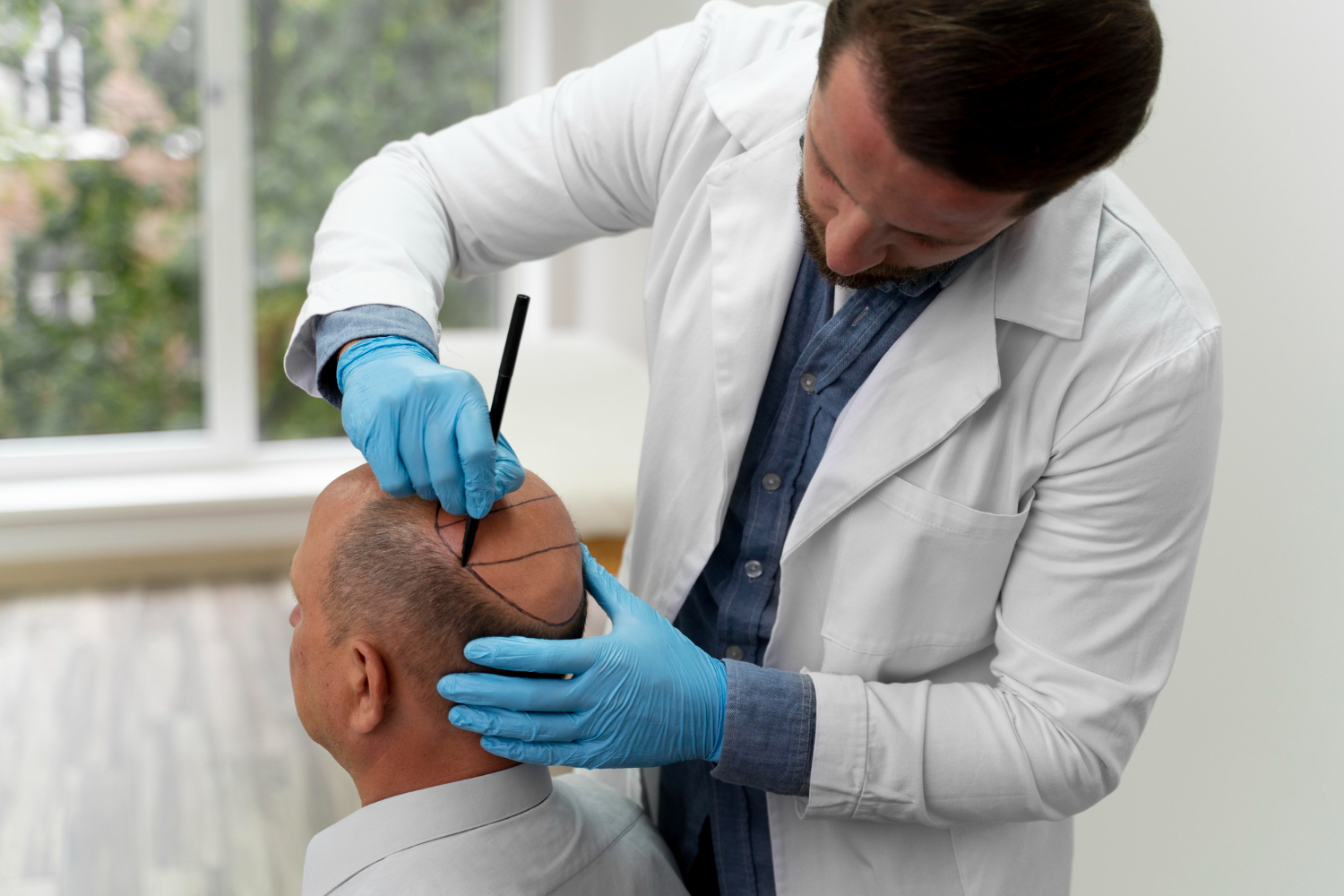
By the time an individual reaches the six-month milestone after a hair transplant, emotions often fluctuate between anticipation and apprehension. The first signs of new hair growth can spark confidence and renewed optimism. At the same time, lingering gaps, uneven density, and visible thin areas may cause concern. This contrast leads many patients to question whether their progress is normal, particularly when they notice patchiness or what feels like delayed regrowth at this stage.
It is common to assume that results at six months should resemble the dramatic before-and-after images circulating online. In reality, the biological hair cycle is still midway through recovery. Patients have already experienced swelling, shedding, and gradual regrowth, which makes the six-month mark feel decisive, even though it is far from the final outcome. To understand why results vary, it is essential to consider hair biology, medical conditions, surgical precision, and growth patterns commonly seen in Indian patients seeking the hair transplant in Hyderabad.
Why the 6-Month Stage Is Still Considered Early
Hair restoration procedures in India are performed on a population with widely varying hair-loss patterns. A large epidemiological study indicates that nearly 58% of Indian men between 30 and 50 experience androgenetic alopecia. Most patients, therefore, opt for a hair transplant in Hyderabad only after years of progressive thinning, follicular miniaturization, and fluctuating density.
As a result, transplanted follicles are placed into a scalp that is not biologically ideal but already affected by ongoing hair-loss mechanisms. An important insight from an Indian analysis of 24,595 hair-loss patients revealed that telogen effluvium, a temporary shedding disorder, accounted for 40.7% of cases. This condition alone can significantly delay early regrowth and heighten anxiety during the six-month phase, even when grafts are healthy.
The scalp functions as a complex biological ecosystem. The pace at which transplanted follicles resume growth depends not only on surgical quality but also on systemic health, hormonal stability, nutritional status, and the activity of existing hair loss. This explains why even the hair transplant in Hyderabad may show varied results at this stage.
The Typical Hair Growth Timeline Before Month Six
Hair regeneration is slower than many patients expect. After transplantation, follicles undergo controlled trauma and naturally enter a resting phase before initiating new growth. This pause is universal, yet often misunderstood.
A general timeline includes:
- Weeks 1–4: Implanted hairs shed, making the scalp appear unchanged or slightly thinner.
- Months 2–3: Minimal visible growth occurs, often leading to concerns about delayed progress.
- Months 3–4: The earliest new hairs emerge, usually fine, light, and subtle.
- Around Month 6: Noticeable coverage develops, typically representing 40–60% of final density, depending on hair calibre and donor quality.
While this stage is encouraging, it does not represent the final result. Most thickening, texture refinement, and density improvement occur between months 9 and 18. This is why outcomes from a hair transplant in Hyderabad may appear incomplete at six months.
Why Some Patients Show Faster Growth at Six Months

Patients who demonstrate rapid progress are not simply fortunate. They benefit from a favourable convergence of biological, surgical, and lifestyle factors. Each variable influences how quickly follicles transition from rest to active growth and how rapidly hair shafts thicken.
Factors associated with faster early growth include:
- Youthful follicular biology with superior blood supply
- Thick, coarse, or curly hair that creates quicker visual density
- High graft survival due to meticulous handling and minimal trauma
- Stable systemic health supported by balanced nutrition, proper sleep, and non-smoking habits
When these elements align, outcomes from the hair transplant in Hyderabad may appear well ahead of schedule.
Why Some Patients Experience Slower Progress
Slower regrowth is common and often entirely normal. Many individuals mistakenly interpret delayed progress as graft failure, when the underlying cause is usually biological.
Key contributors include:
Ongoing Androgenetic Alopecia
A transplant does not eliminate genetic hair loss. Without appropriate medical management, native hairs continue to shed, creating the impression of poor regrowth despite intact grafts.
Telogen Effluvium
Highly prevalent in India, telogen effluvium can be triggered by surgery, stress, illness, or nutritional shifts. This condition pushes hairs into a resting phase, delaying visible results even after a technically sound hair transplant in Hyderabad.
Nutritional Deficiencies
Deficiencies in iron, vitamin D, vitamin B12, and protein are common and directly affect hair shaft formation. These deficits can slow follicular activation and weaken early growth.
Undiagnosed Scalp Disorders
Inflammatory or scarring alopecias reduce vascular support and follicular stability, increasing the likelihood of delayed regrowth unless treated appropriately.
Technique-Related Factors Influencing Six-Month Outcomes
Even in advanced centres offering the hair transplant in Hyderabad, technical nuances can affect early growth patterns. FUE is highly sensitive to execution.
Important variables include punch size and angulation, donor area management, graft out-of-body time, and implantation depth. The use of beard or body hair grafts may also lead to slower early visibility. When technique and planning are optimal, most patients show marked improvement by months 9 to 12.
How Patients Can Support Growth in the First Six Months
While biology dictates the pace of growth, supportive measures can optimise outcomes after a hair transplant in Hyderabad:
- Adhering strictly to post-operative care guidelines
- Using medically advised therapies to stabilise native hair
- Correcting nutritional deficiencies to support keratin production
- Managing stress, a known trigger for delayed regrowth
These steps help maintain a healthy scalp environment as follicles transition into active growth.
When to Seek Professional Evaluation
Although delayed growth is common, medical review is advisable if there is minimal visible change by six to seven months, persistent bald patches without sprouting, irregular donor appearance, or ongoing untreated hair loss. Early assessment can differentiate normal delay from correctable issues, even after the hair transplant in Hyderabad.
Why Clinic Selection Matters and the Role of Ojas Aesthetics
Hair restoration is a gradual biological journey, not an instant transformation. The six-month stage often raises doubts because growth is still evolving. This is why choosing a medically driven centre is crucial. Clinics that prioritise accurate diagnosis, scientific planning, and precise technique consistently deliver more predictable outcomes after a hair transplant in Hyderabad.
At Ojas Aesthetics, comprehensive scalp evaluation, medical optimisation, and advanced FUE techniques are standard. Meticulous graft handling and structured post-operative protocols significantly reduce the risk of delayed growth. Patients receive clear, realistic guidance on milestones, including what to expect from the hair transplant in Hyderabad at six months and beyond.
With evidence-based practice and transparent care, Ojas Aesthetics provides a reliable path to natural, lasting hair restoration.
FAQs
1. Is limited growth at six months normal after a hair transplant?
Yes. Six months is still an early phase. Most patients achieve only partial visible density by this time. Full maturation continues up to 12–18 months after a hair transplant in Hyderabad.
2. Why do growth rates vary so much between patients?
Age, hair texture, scalp vascularity, donor quality, medical conditions, and technique all influence growth speed. Even the hair transplant in Hyderabad will show individual variation.
3. Should thin or patchy areas at six months be a concern?
Not necessarily. Patchiness is common early on. Many hairs are still fine and immature and usually thicken over the next few months.
4. What causes slow progress after a hair transplant?
Common reasons include telogen effluvium