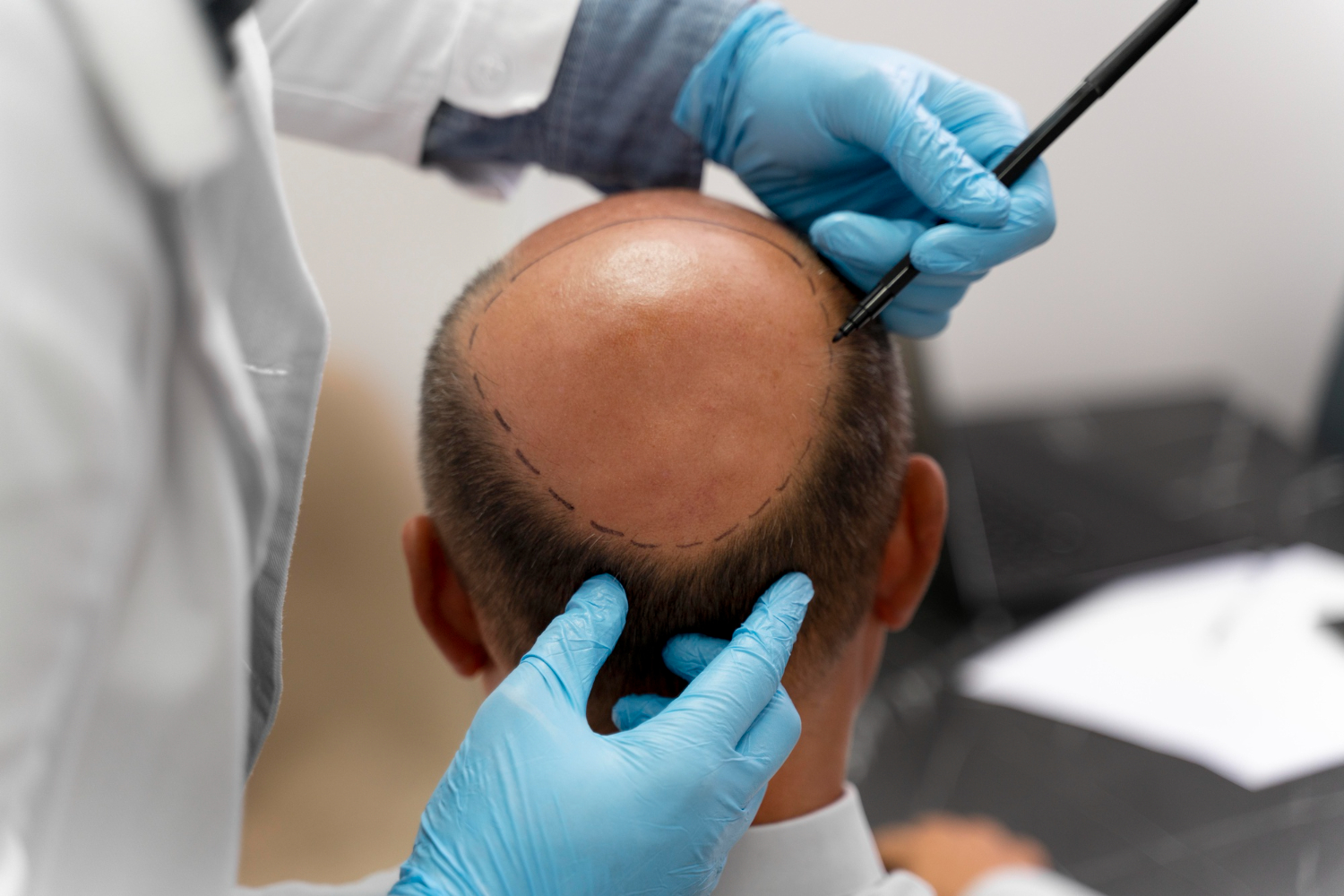
Hair transplantation in Hyderabad is one of the most frequently searched medical services on the Internet — no surprise here! Millions of people in India suffer from hair loss, which significantly undermines their confidence and self-esteem. However, with the help of the proper surgeon and treatment approach, a hair transplantation procedure can become your ticket to a thicker mane and better appearance. In this article, we will cover all the necessary information, starting from the definition of a hair transplant procedure and ending with its procedure, recovery process, and indications of candidacy. In case you have been searching for the hair transplant in Hyderabad, study each word carefully!
What Is a Hair Transplant?
Hair transplantation surgery is a type of surgery that involves removing healthy and genetically resistant hair follicles from one part of the body, such as the head’s back or sides, to be transplanted to other areas where there is hair loss or balding. Contrary to other hair treatment methods, a well-done hair transplant in Hyderabad will provide you with a long-lasting and natural appearance since the transplanted follicles keep their ability to grow from the donor area.
This is the only treatment available for pattern baldness and some other types of baldness.
Types of Hair Transplant Techniques – FUE vs FUT
The selection of the appropriate method is one of the most crucial aspects of your hair transplant process in Hyderabad. There are two major techniques available: FUE and FUT, both having their respective strengths according to patient requirements.
1. FUE – Follicular Unit Extraction
Currently, FUE is the most commonly chosen procedure for the best hair transplant in Hyderabad. Each follicular unit is removed individually with the help of a micro-punch device from the donor site, resulting in small, round scars that heal rapidly and are nearly invisible. There is no need for a linear incision and a shorter recovery period, and it suits patients who like to keep their hair short.
Benefits of FUE:
- No scar formation
- Reduced recovery period
- Minimal post-procedural pain
- Appropriate for small grafts and facial hair transplants
2. FUT – Follicular Unit Transplant
In FUT, the removal of a strip of hair-bearing tissue from the donor site takes place. This strip is cut up into tiny individual hair bundles using magnifying tools. FUT provides more follicular units in a single procedure, making it ideal for patients experiencing significant hair loss problems.
- A greater graft can be done in one session
- More appropriate for extensive hair loss problems
- Follicles suffer less trauma during harvesting
Who Is an Ideal Candidate for Hair Transplantation?
Not everyone experiencing hair loss is automatically a good candidate for a hair transplant in Hyderabad. The ideal candidate typically meets these criteria:
- Experiencing stable, non-progressive hair loss (pattern baldness)
- Has sufficient donor hair density at the back and sides of the scalp
- Is in good overall health with no uncontrolled medical conditions
- Has realistic expectations about the results and recovery process
- Is generally between 25 and 65 years of age
- Has not responded adequately to non-surgical treatments like PRP or GFC therapy
A thorough pre-operative assessment by a qualified surgeon is essential before proceeding with the hair transplant in Hyderabad.
Hair Transplant Failure Reasons – What Goes Wrong?
Even with the best intentions, some hair transplants do not deliver expected results. Understanding the common failure reasons helps you make a more informed decision:
- Poor donor area selection: extracting from weak zones reduces graft survival
- Inexperienced surgeon: graft damage during extraction or implantation directly impacts outcomes
- Incorrect angle and direction of implanted follicles leading to unnatural growth patterns
- Poor post-operative care: not following aftercare instructions compromises graft survival
- Unrealistic expectations: expecting full density in one session when multiple may be required
- Active or progressive hair loss: operating on unstable hair loss leads to continued thinning around the transplant
- Underlying medical conditions: untreated thyroid disorders, anaemia, or hormonal imbalances affecting regrowth
Choosing the hair transplant in Hyderabad from an experienced, qualified surgeon dramatically reduces all of these risks.
Step-by-Step Hair Transplant Procedure
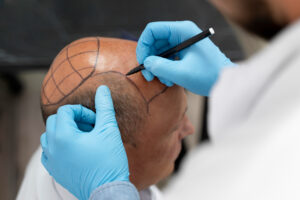
Here is a detailed walkthrough of what actually happens during a hair transplant in Hyderabad at a quality clinic:
Preoperative Evaluation and Planning
A comprehensive consultation including scalp analysis, donor density assessment, blood tests, and discussion of goals and expectations. The surgeon determines the number of grafts required and selects the most appropriate technique.
Design and Marking of Hairline and Recipient Zones
The surgeon carefully marks the new hairline and recipient areas with the patient seated upright. This is a critical aesthetic step — the design must complement the patient’s facial structure, age, and long-term hair loss trajectory.
Administration of Local Anaesthesia
Local anaesthesia is administered to both the donor and recipient areas. A mild sedative may also be offered for patient comfort.
Harvesting of Donor Follicles (FUE or FUT)
- In FUE: Individual follicular units are extracted using a micro-punch — typically 0.7mm to 0.9mm in diameter — in a pattern that preserves donor area density
- In FUT: A measured strip of scalp is excised from the safe donor zone and the wound is sutured closed, leaving a fine linear scar
Graft Preparation Under Magnification
Extracted grafts are sorted, trimmed, and categorised by a skilled technician under magnification into single, double, and multi-follicular units. Grafts are kept in a chilled holding solution to maintain viability until implantation.
Creation of Recipient Sites
The surgeon creates tiny incisions or slits in the recipient area at precise angles, depths, and densities to replicate the natural hair growth pattern. This step defines the final aesthetic outcome of the hair transplant in Hyderabad.
Implantation of Follicles
Prepared grafts are carefully placed into recipient sites — one by one — following the planned density and direction map. Single-hair grafts are used along the frontal hairline for a natural look; multi-hair grafts fill the crown for density.
Procedure Duration
A typical session lasts between 6 and 10 hours, depending on the number of grafts. Patients can rest, watch content, or listen to music during the procedure.
Post-Operative Care Instructions
Proper postoperative care is essential for graft survival and optimal healing after a hair transplant in Hyderabad.
1. First Three Days
- Sleep with your head elevated at a 45-degree angle to reduce swelling
- Avoid touching, rubbing, or pressing the transplanted area
- Do not wash the scalp — use only the prescribed spray or saline mist
- Avoid direct sun exposure, smoking, alcohol, and strenuous activity
- Take all prescribed antibiotics, anti-inflammatories, and pain medication as directed
2. First Ten Days
- Begin gentle hair washing from Day 3 or 4 as instructed by your surgeon
- Wash using a soft pour technique — never use running water pressure directly on grafts
- Avoid swimming, gym workouts, and any activity causing heavy sweating
- Scabs will naturally form and fall off by Day 7–10 — do not pick or scratch them
- Attend your follow-up appointment for graft assessment and wound review
Timeline of Results – When Will You See Your New Hair?
One of the most common concerns among patients considering the hair treatment in Hyderabad is the timeline. Here is what to realistically expect:
First Month
Transplanted hair enters a shedding phase called telogen effluvium. Most of the transplanted hair falls out within 2–4 weeks. This is expected — the follicles themselves remain alive beneath the scalp.
One to Two Months
The scalp looks sparse, and patients often feel disheartened at this stage. The follicles are dormant but healthy beneath the surface, preparing for active regrowth.
Two to Three Months
Fine, new hair strands begin emerging from the transplanted follicles. Growth is initially thin and wispy — texture and thickness improve progressively over the following months.
Six Months
Approximately 50%–60% of the final result is visible at this stage. Hair is noticeably thicker, more defined, and the hairline begins to look natural and well-formed.
One Year
The full, final result of your hair transplant in Hyderabad is visible at 12 months. Hair is dense, natural, and permanent — growing, cycling, and behaving exactly like your original hair. Most patients are delighted by this stage.
Who Is Eligible to Perform a Hair Transplant?
This is a question every patient must ask before choosing their provider for the hair transplant in Hyderabad. A hair transplant must be performed by
- A qualified plastic surgeon, dermatologist, or cosmetic surgeon with specific training in hair restoration surgery
- A surgeon who has performed a significant number of documented hair transplant procedures
- A clinic that employs trained graft technicians working under strict magnification protocols
- A team that conducts a thorough pre-operative medical evaluation before proceeding
Important Considerations Before Surgery
Before committing to a hair transplant in Hyderabad, keep these points firmly in mind:
- Stabilise your hair loss first: Proceeding during active, progressive loss means you may need additional surgery later, as the surrounding hair continues to thin
- Manage medical conditions: Thyroid disorders, anaemia, scalp conditions, and hormonal imbalances must be treated before surgery
- Set realistic expectations: A single session cannot replicate full original density — multiple sessions may be needed for advanced cases
- Review before-and-after photos: Always ask your surgeon for documented results from previous patients
- Understand the costs clearly: The hair transplant in Hyderabad is priced per graft — get a clear, itemised quote upfront
- Non-surgical options first: For early-stage hair loss, PRP, GFC, and mesotherapy may deliver excellent results without surgery
Conclusion
A hair transplant in Hyderabad is one of the most effective and permanent solutions for hair loss — but it is also a surgical procedure that demands careful planning, the right surgeon, and committed aftercare. If you are experiencing significant hair thinning or baldness and want results that last a lifetime, the hair transplant at a trusted clinic like Ojas Aesthetic could genuinely change your life.
The key is not to rush. Consult, evaluate, ask questions, and choose a team with the experience and honesty to guide you through the entire journey—from assessment to full recovery. Book a Free Consultation for the Hair Treatment in Hyderabad Today!
FAQs
1. Is a hair transplant painful?
No. A hair transplant generally does not hurt, as it’s performed under local anesthesia that numbs the scalp during the procedure. While some patients may feel a slight sting from the anesthetic injections, the surgery itself is usually painless
2. How long does a hair transplant procedure take?
It typically takes 4 to 8 hours, depending on the number of grafts and whether the FUE or FUT technique is used.
3. When will new hair start growing after a transplant?
New growth usually begins around 8 to 12 weeks after shedding of transplanted hair. Full results take about 12 months.
4. Is a hair transplant permanent?
Yes. Transplanted hair follicles are resistant to pattern baldness and generally continue growing for life, although native hair may continue to thin.
5. Can I shower 2 weeks after a hair transplant?
You may start washing your hair the normal way, no sooner than 14 days after the transplant